Peterson Cartridge Company
Founded in Pittsburgh, Pennsylvania by Derek Peterson and his two business partners, Peterson Cartridge was built with one main goal. That goal is to produce extremely consistent, American-Made brass rifle casings which are designed around, and for long-distance shooters.
We are a proud member of the Peterson Brothers, Inc. team and are made with pride, in Pittsburgh, Pennsylvania USA.
Peterson Cartridge is a family-owned, American manufacturer of match-grade, brass rifle casings that is among the most precise and consistent on the market, delivering discerning long-distance shooters sub-MOA accuracy.
2013
2014
2015
2016
2017
2018
2019
2020
2021
2022
2023
2024
by Terry Peterson
Sometime after our family started Peterson Cartridge, I was asked by a non-hunter, “What was it that ‘appealed to you’ about going into the ammunition business?” The tone in his voice made me feel like he was one of those people who believes that the predominant use of ammunition is to commit gun crimes. Like so many people, he seemed to have no conception of what hunting is to the millions of people who get wholesome enjoyment and fulfillment from it every year.
It got me thinking.
Just before we went into the industry, we had ordered a new hunting rifle. After completing the background check and inspecting the new gun, we asked the store owner for a couple boxes of shells in that caliber. The conversation went like this:
“We don’t have any shells.”
“What do you mean?”
“Yah, we are out of ammo.”
“You don’t have any ammo!?”
“Nope. We’ve been out for some time.”
“Are you saying you are out of the caliber we need? Or are you saying you are out of all calibers?”
“All calibers.”
“Well, ok. I prefer to buy from you. But I guess I’ll have to go to Walmart.”
“You can go there. But they are out too.”
“You’re telling me Walmart has zero ammo in the whole store!?”
“Yep.”
“How about other stores in the area?”
“Out also. No one has ammo. Been that way for some time now.”
To confirm what we were told, we checked stores within 80 or 100 miles – small gun shops, Cabela’s, on-line ammo dealers. All out of ammo. It got me thinking about not being able to go deer hunting for want of ammo; and what deer hunting represented to me.
In western Pennsylvania, where I grew up, rifle season for deer lasted two weeks. We had no Sunday hunting, so you were going out both Saturdays, regardless of weather. If you’ve never been walking the woods in the dark before sun-up, it is a distinct experience. The smell of the woods in the late Fall. The darkness focuses the feel of the crisp cold air on your face. Getting settled in your spot, waiting for the sunrise through the tree line.
We northern hunters know all about trying to be stealthy while trudging through snow. One time I read that Eskimos have 30 different words to describe types of snow. If that’s true, I can understand the reason. There is really deep snow, heavy wet snow, dry powdery snow. There is snow that was on the ground all week, but it warmed up yesterday, and the snow started to melt, but last night the temperature dropped below freezing again, and now there is a thick, crisp layer of frozen crust on top.
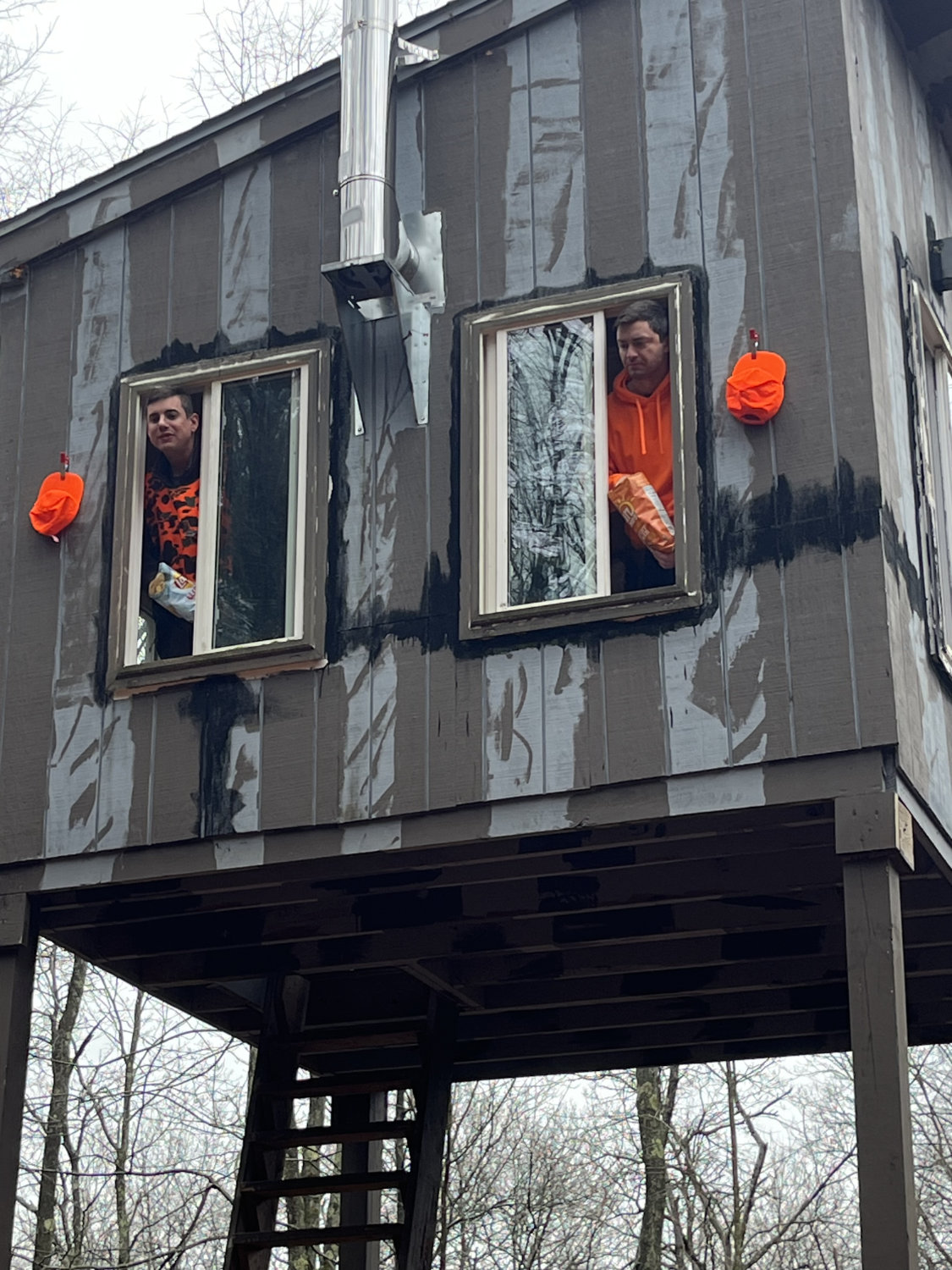
Then there is the light dusting of snow that fell the day before on the leaves that cover the ground. But it got really cold last night. And today, every step you take rings out like walking on potato chips. Other years you spend the days in the rain. We northern hunters experience all of it. And you need different strategies to hunt in those different conditions.
Some days are beautiful and sunny. Maybe you are tucked in behind a blowdown tree, blending in with nature. After you develop the skill of sitting silently for long stretches, the birds feel comfortable enough to carry on their day in front of you. The squirrels come out and scamper around. Sometimes you’ll notice a fox sneaking through the brush. It’s common to see “Vs” of geese flying overhead, but the honking they make seems much louder in the woods, because there isn’t the ambient noise of streets and neighborhoods.
Spending blocks of time in the woods, you begin to notice that some of the trees have personality. You might see one that has been dramatically twisted by the wind as it grew. You might see a giant, branches spread wide, that predates this woodlot, to a time when this land was a farmer’s field.
On hunting days, you get out to the woods about 6 a.m.. You normally begin the walk back to the truck after dark. You’re out there for 11 or 12 hours. It’s common for a whole day to go by without ever taking your gun off “safe’ because you didn’t see any deer. But you walk out, hopeful that maybe next Saturday you’ll get a shot.
If it wasn’t for hunting, most of us wouldn’t have occasion to spend that amount of time in the woods, in all types of weather. For me, spending that time, surrounded by the majesty of nature, makes an enriching deposit to my sense of wellbeing.
My dad and grandfathers weren’t hunters. But my uncle and cousins were. It seemed like fun to me, and I wanted to be part of it. My uncle loved being outdoors – I think for the same reason Rip VanWinkle did. He always seemed happy to take us boys out hunting. But looking back now, I realize he wasn’t very good at it. I never knew him to shoot a deer. Hardly any of us ever got deer. That’s because, to consistently get deer every season, you have to have skills.
You have to learn about the behavior of deer. You have to learn how to walk silently. You have to know different strategies for different times of day and different types of weather. In the big woods you also better know how to use a compass.
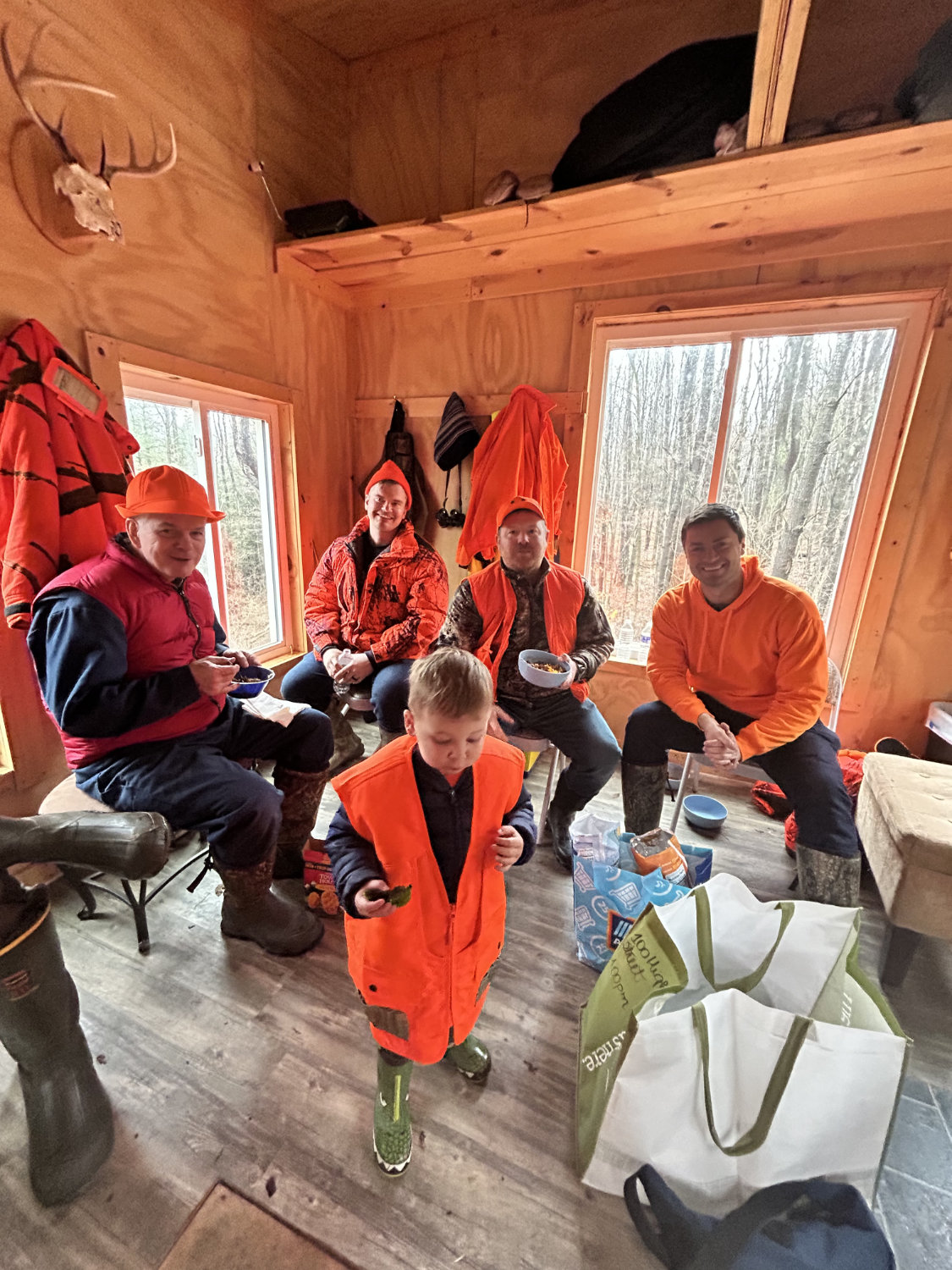
And it’s all for naught if you haven’t developed the skill of hitting your target with a high-powered rifle. Most successful hunters have spent hours at the gun range developing their shooting skills. You have to learn how to dial in a new scope, shoot accurately from different positions and anticipate bullet trajectory.
Then there is another body of knowledge you need to learn when you get your first deer. There is a right way, and a lot of wrong ways, to field dress a deer. Processing a deer is also fascinating: to hold a heart in your hand, to see what actual lungs look like. The anatomy is awe inspiring.
Developing most any skill is empowering, especially for young people. It improves confidence. And there are a lot of skills required to be a consistently successful big-game hunter.
When I think of hunting rifles, I imagine the old-school Weatherby Mark V – beautiful walnut stock with the inlaid contrasting wood, the dark, rich bluing on the barrel, the raised cheek piece, pistol grip cap, fillagree engravings in the metalwork, – which many people admire like fine jewelry.
I appreciate a beautiful rifle the same way I appreciate beautiful wood furniture – like a dining room suit of hand polished cherry, with contrasting inlays, with cabriole legs and lion paw feet. It’s about “obvious craftsmanship.”
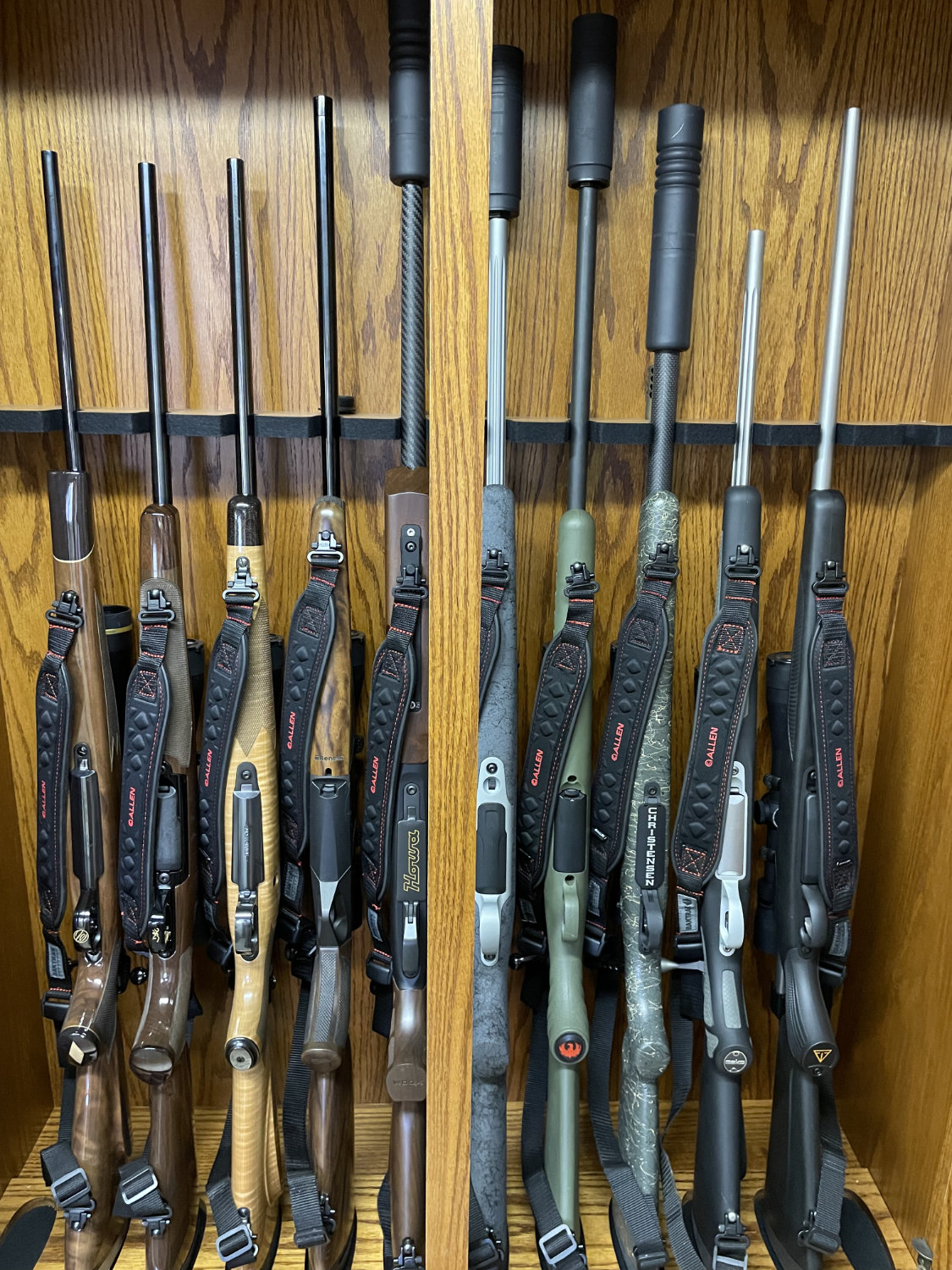
Caption: The glass doors might seem low security, but the cabinet is kept in a cement block room where the access door is always dead bolted.
To me, the spell cast on appreciators of a great rifle, is similar to the spell cast by encountering wonderful architecture that is so engaging you don’t want to look away.
There are numerous styles and types and shapes of rifles, and most have features worth admiring. I was among the generations of young boys who spent countless hours looking over gun company catalogues, memorizing bullet weights and drop tables, dreaming about the day they could afford to upgrade to their version of the ideal gun.
Ever since high school I’ve had “hunting-camp envy.” Many of my school-friends’ families had hunting camps. And I envied the stories they told in school about the time they spent at camp. A lot of it was about family traditions. For years, opening day in PA was on a Monday. The common tradition was to go to camp on the Saturday before. Over the weekend they would split firewood, sight in rifles, play cards, and eat chili. Hunting strategies were planned, “If we haven’t seen anything by ten o’clock tomorrow, you three walk out around the beaver pond and put on a push through the red brush up to where grandpa and uncle Larry will be.”
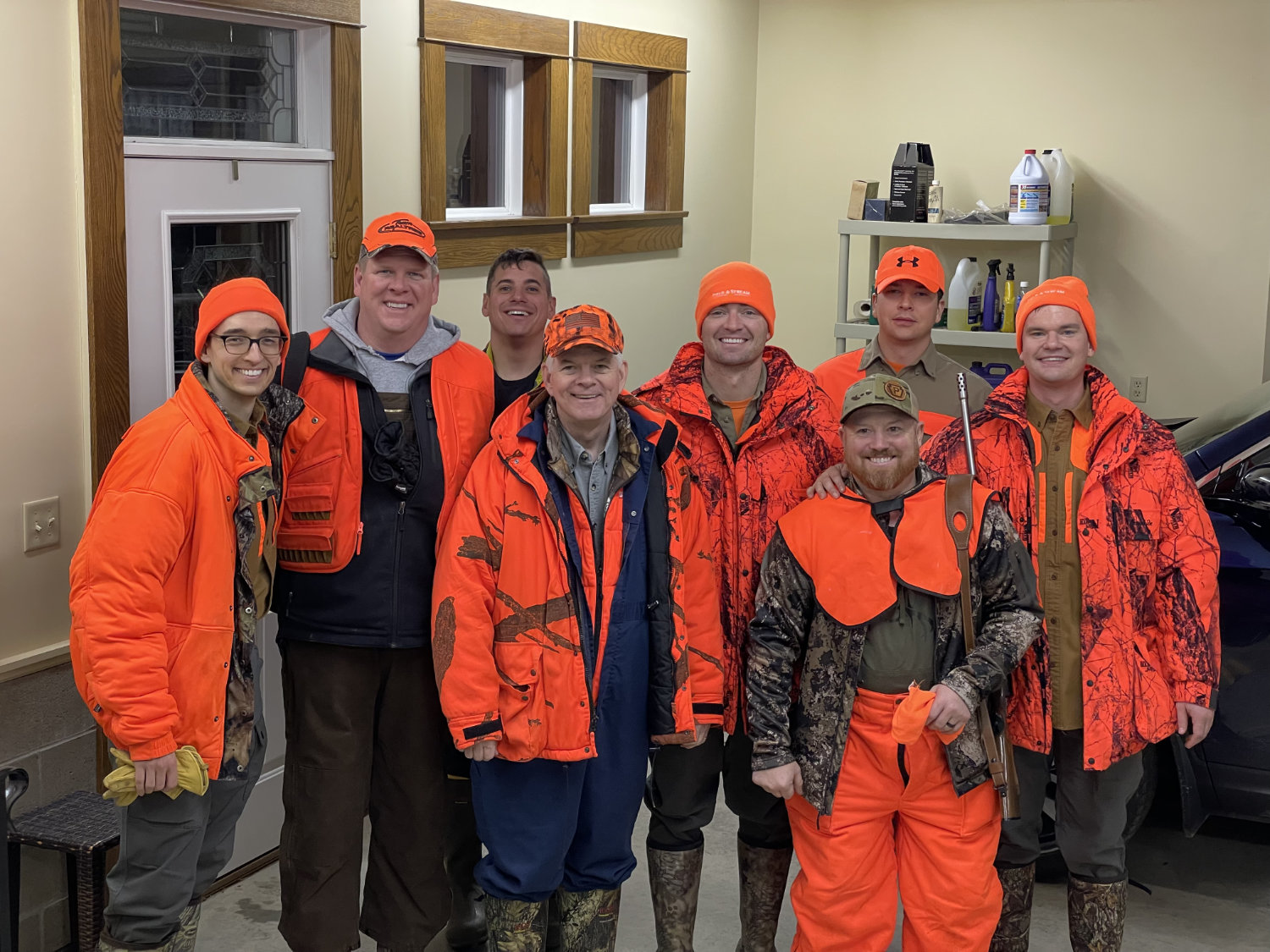
Boys had a chance to see their dad and grandfathers and uncles in a different light – outside of work, outside of doing household chores. They heard stories from hunting seasons past; stories of the remarkable thing that grandpa did that one time. Or that time Uncle Dan dozed off and the buck walked right past him. Legends were recounted, new memories were made. And during it all, there was a lot of laughing and camaraderie. It seemed to me that deer camp was where boys learned how to be young men.
During those days together, the elders ingrained in the younger ones the important safety rules: always be sure of your backstop, always unload your gun whenever you cross a fence or a creek. Scenarios popped up where the dads could explain to the newer hunters about ethical hunting and ethical treatment of game.
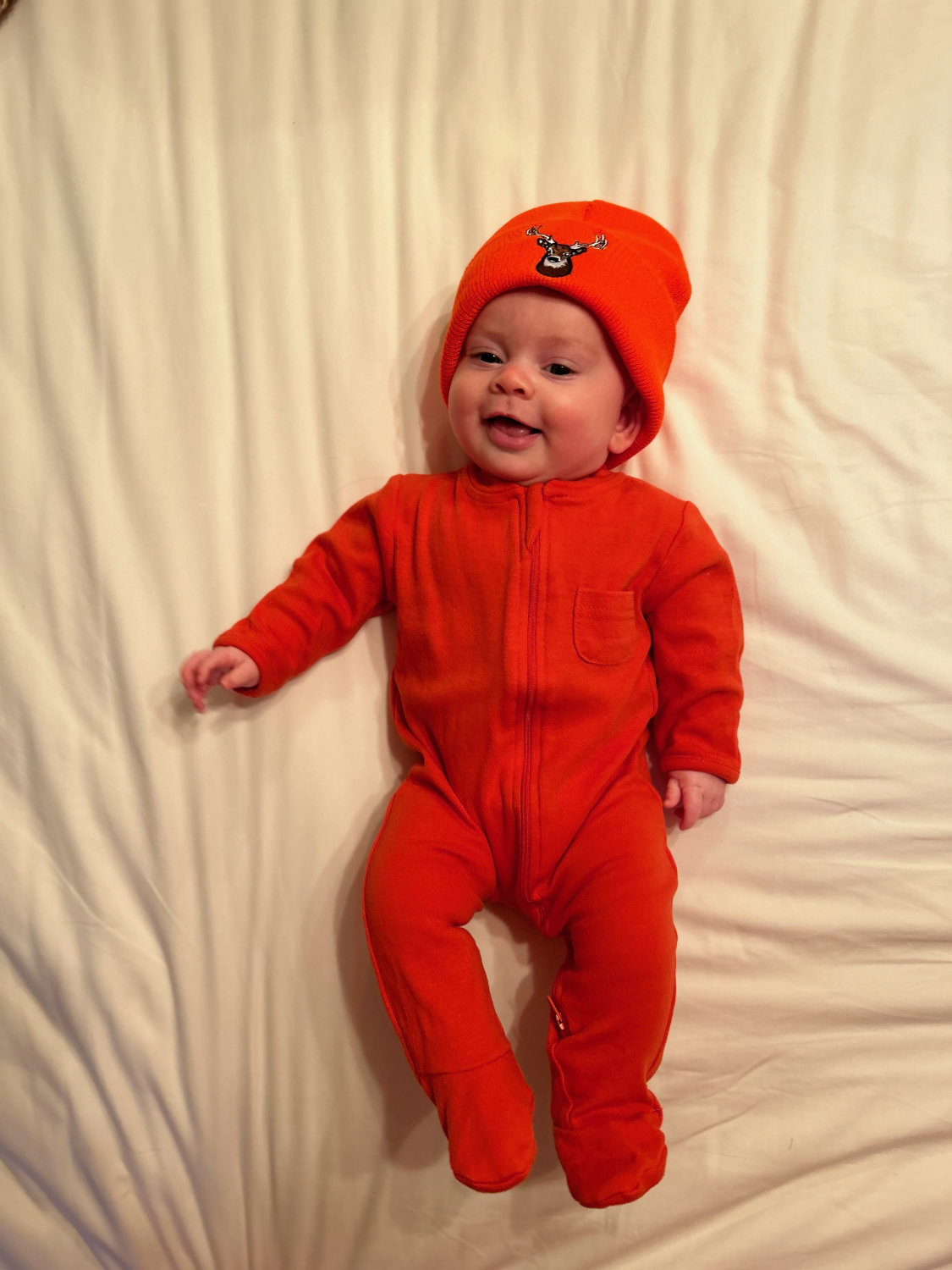
Non-hunters might not realize that “hunting” is mostly standing around, or sitting around, for large blocks of uninterrupted time. Other than the infrequent spotting of a deer, “hunting” is code for time where cousins can get caught up on what big is going on in each other’s life. Older family members have the time to ask highschoolers about their plans after graduation. There’s time to talk to the 20- and 30-year-olds about how their new career is coming along. “It was a lot of fun at your wedding last summer … so what are you learning about harmonious co-habitation?” “Are you doing a good job of saving for retirement?” Or, “What’s been going on with that high-energy three-year-old of yours, and what have you learned about parenting strategy?” A day spent hunting together provides a block of time to discuss real-life issues, that normally wouldn’t come up in people’s otherwise busy lives.
Without ammunition, there is no hunting, and all those wholesome experiences go away. So, one of the things that “appealed” to me, about going into the business of manufacturing rifle casings, was to be associated with the experiences hunters have in the great outdoors, the development of personal skills, the appreciation of beautifully crafted hunting rifles, and the continuation of rich family traditions.
If you've got any questions just let us know and we'll get back to you promptly.
By entering this website, you certify that you are 18 years of age or older.